Sample to Bulk / Approval guide

Curtain fabric wholesale: approve each material stage

A useful sample plan identifies what each stage can prove and what remains unresolved. Independent sourcing coordination keeps the approved article reference connected to quotation, production and delivery discussions.

Request a sample plan
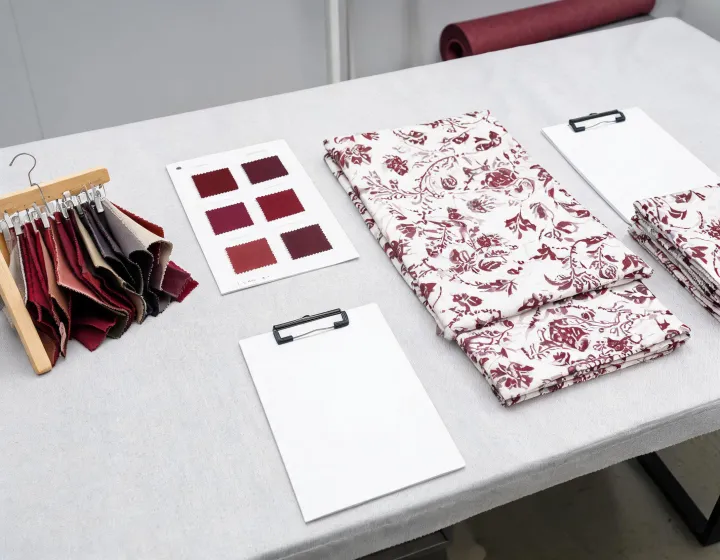
Curtain sample stages arranged as an approval sequence

Release decisions, not just sample parcels

A

Screen the construction

A swatch helps compare handle, drape, weave and appearance. Record fiber composition, yarn count, GSM and usable width from the proposed article specification. Mark the sample ID and whether it represents stock, development or a previous lot. A small hanger does not prove bulk shade consistency or available quantity.

B

Approve color and print separately

Review lab dips against the nominated color standard and agreed lighting. For printed cloth, a strike-off addresses repeat, registration and appearance; it does not automatically approve the production substrate. Capture the date, reviewer, decision and permitted deviation. Review backing or finish changes because they can alter handle and appearance after color selection.

C

Connect pre-production to evidence

Where required, confirm a pre-production sample using the agreed construction, finish and backing. Request shrinkage, colorfastness, lightfastness or flame reports on the exact relevant specimen. The report needs method, edition, specimen state, conditioning, laboratory and agreed threshold. The AATCC method listing provides reference points, not a test result or a certification of the quoted material.

D

Set bulk release and inspection scope

Identify the approved reference, bulk dye lot, roll numbering and shade-grouping policy. Agree which measurements and roll inspection records must be available before release. A repeat order needs current availability and lot confirmation; an earlier approval cannot establish that a later roll matches without the agreed checks.

Stock speed or development control?

Stock material can simplify the initial sample route if its specification fits. Custom development can target an exact construction or finish, but introduces minimums and additional approvals. Compare sample fees, courier costs, test scope, replacement obligations and lead-time triggers rather than assuming a sample is free or a development date is a bulk delivery commitment.

Budget choices stay attached to approval scope

A high-end preference can prioritize finish consistency and development service; a budget preference may prioritize a suitable stock article. Neither is a verified factory rating. State currency and per-meter, per-yard or total-order basis, then compare the same usable width and delivered scope. Lower unit price does not resolve sample deviations, missing test evidence or yield differences.

For your custom curtain inquiry, record open questions as open. The supplier comparison workflow and procurement brief help connect these approvals to the commercial request.
Define the next sample decision

Tell us what has already been reviewed, which stage is next and who can approve it. Include article references and sample or bulk timing as requested dates, subject to supplier confirmation and written release conditions.

Include your US destination and intended approval date. Unknown details can remain open for supplier clarification; the inquiry does not commit you to an order.